
Ukrainian Business Integration into the EU: Moving from “Success Stories” to Rigorous Compliance
20.06.2026
The expansion of Ukrainian business toward the European Union, and Poland in particular, has undergone a profound and qualitative evolution in recent years: transitioning from tentative first steps to a phase of mature, pragmatic, and systemic integration. Today, Poland stands as a vital strategic partner with whom Ukrainian enterprises can build unique, synergistic alliances. While hundreds of theoretical manuals have been written on entering EU markets, true success lies in the practical realm—built upon robust legal compliance, mutual respect, and the ability to speak the language of hard data, premium standards, and impeccable service.
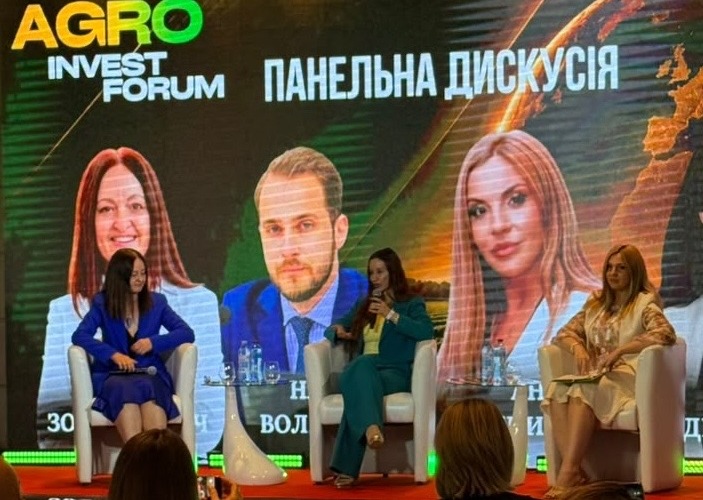
On June 17–19, 2026, Kyiv became the epicenter of international agribusiness, bringing together over 7,000 participants at the large-scale AGRO UKRAINE WEEK 2026—the year’s premier event for the agricultural sector, investments, and strategic partnerships. As part of the panel discussion “Ukraine in European Markets: Cooperation Opportunities and Case Studies,” organized with the support of the Ukrainian-European Business Hub (UaEuHub), Anna Vinnychenko, Managing Partner of WinnerLex Attorneys at Law and Official Representative of the Ukrainian Chamber of Commerce and Industry in Poland, joined the event as a keynote speaker within the Agro Invest Forum 2026.
Speaking also in her capacity as an Ambassador for the Polish business community Alliance Business Connect in Ukraine and Head of the international trade agency InterTrade Agency Sp. z o.o., Anna Vinnychenko led a constructive dialogue on how the modern framework of cooperation between Ukrainian businesses and Europe is being shaped, highlighting what typically remains “behind the scenes” of polished corporate presentations.
Below, we dissect the primary myths, hidden pitfalls, and strategic benchmarks that will help Ukrainian companies avoid critical errors and build a sustainable, successful business within European jurisdictions.
1. The “Just Business” Mode: Why the Polish Market Offers Major Opportunities
The media landscape is frequently crowded with informational noise surrounding political statements or historical debates between our nations. Recent political developments have once again tested emotional resilience, as headlines quickly amplified a new wave of tension driven by mutual recriminations and high-profile disputes over state orders and decorations.
However, professional legal and business analysis requires a strict decoupling of media noise from real-world economics. It is essential to distinguish between two entirely different dimensions: transient political fluctuations and pragmatic business operations. When parties sit down at the negotiating table, politics instantly evaporates, giving way to transparent figures and profit margins.
- Respect for Strong Partners: The Polish market is highly developed, dynamic, and fiercely protective of its domestic producers. This commands genuine respect, as Polish businesses excel at safeguarding and developing their interests. Consequently, they value an equally professional approach from their Ukrainian counterparts. We earn respect when we deliver high-quality solutions, transparent European standards, and absolute reliability.
- Economic Synergy and Bilateral Interest: Polish industrialists, major processing enterprises, retailers, and logistics giants are genuinely interested in high-quality Ukrainian products, innovative ingredients, and raw materials. Our businesses enhance their export potential further into Western Europe, rendering the entire region more competitive on the global stage.
- Two-Way Capital Flow: It is crucial to recognize that this is not a one-way street. Polish companies, manufacturers, and leading retail chains are equally eager to enter the Ukrainian market and integrate into our domestic retail networks. This mutual interest establishes an ideal foundation for constructing robust, long-term Joint Ventures and strategic alliances.
- The Flip Side of the Coin: European pragmatism demands strict corporate discipline from Ukrainian companies. Business operates on cold, precise calculations. If you secure a contract, you must perform on par with your German, French, or Danish peers. This is not discrimination; it is a powerful catalyst for Ukrainian enterprises to elevate their international compliance to a fundamentally new level. Your goods must arrive strictly on time, meet identical quality specs, and align with the agreed price. This operational reality is uniform across the entire EU—Poland is no exception.
2. Cross-Border Contract Architecture: Why Domestic Market Rules Fail
When a company scales to the level of international cross-border transactions, the magnitude of risks and minute operational details escalates exponentially. The most dangerous pitfall is assuming that a well-drafted domestic contract, simply translated into English or Polish, is sufficient to protect your corporate interests.
In cross-border trade, there is no room for “common sense” assumptions or default terms. The only thing that carries legal weight is what is explicitly codified on paper.
Operational Case Study: A Ukrainian manufacturer of grocery goods secured a major contract to supply products to a European retail chain under a Private Label brand, utilizing standard EXW terms (Ex Works—pickup from the factory in Ukraine). The logistics team assumed that technical packaging specifications were the buyer’s internal responsibility.
However, the contract failed to outline the step-by-step packaging architecture required by the buyer’s strict warehouse IT regulations. When the truck arrived at the logistics hub near Warsaw, the automated Warehouse Management System (WMS) flatly refused to accept the cargo: the pallets were 10 cm higher than the European rack standard, and the shipping cartons lacked the required barcodes and internal labels for automated scanning.
The European retail giant took a rigid stance: “The contract contains no technical requirements regarding custom labeling or re-palletization on our part. We operate strictly via automated protocols. Either pull the cargo back or utilize our contractor’s re-packaging services, which will cost you €1,000 per truck.” The Ukrainian company was forced to absorb unexpected financial losses and pay for emergency handling in the border zone.
The Takeaway: A cross-border contract must serve as a flawless, step-by-step operational manual. If you are dealing with large foreign corporations, all matters regarding supporting documentation, labeling, pallet height, and cargo dimensions tailored to specific customs offices and warehouses must be explicitly detailed in a dedicated technical appendix to the contract.
3. Customs Compliance and Currency Control: A Framework for Legal Protection
With logistics corridors now stabilized, the primary challenges for exporters have shifted toward rigid documentary and financial scrutiny. Any unpredictable delays during European customs clearance or bureaucratic bottlenecks on the buyer’s side during payment processing automatically trigger the unforgiving statutory counter of currency control in Ukraine (strict deadlines for settling foreign economic transactions).
Given that a severe penalty of 0.3% per day is levied for each day export revenues are overdue, your legal defense strategy must be highly proactive.
Legal Action Protocol for Delays:
- Customs Documentation: Any operational delays during customs clearance on the European side (such as supplementary laboratory tests, or specific veterinary and sanitary inspections) must be immediately documented through official records, certificates, and formal letters from customs brokers—not left to verbal agreements.
- Securing Certificates of Force Majeure via Chambers of Commerce (CCI): If an operational delay threatens to breach regulatory currency control windows, companies must immediately initiate the process to secure a formal Certificate of Force Majeure.
- Pre-emptive Litigation or Arbitration: If obtaining a CCI certificate stalls and currency control deadlines are expiring, the sole statutory method to freeze the accrual of state penalties is to file a lawsuit in court or initiate international arbitration. Under Ukrainian law, the formal commencement of proceedings pauses the currency control clock.
Export Strategy Hack: Your legal position becomes significantly stronger if your European counterparty (or your Polish subsidiary—Sp. z o.o.) simultaneously files an application with the Polish Chamber of Commerce (Krajowa Izba Gospodarcza). An official certificate from a local EU chamber carries substantial legal weight with foreign banks and Ukrainian tax authorities alike.
Strategic Counsel from an International Lawyer: When drafting international commercial agreements, always insist on a robust arbitration clause. The optimal tool for a Ukrainian exporter is to refer disputes to the International Commercial Arbitration Court (ICAC) at the Ukrainian Chamber of Commerce and Industry, designating Ukrainian substantive law as the governing framework.
To optimize budgets and accelerate timelines, specify that disputes will be resolved by a sole arbitrator (which is substantially more cost-effective than a three-member tribunal). Proceedings before the ICAC are significantly faster than those in state courts (both in Ukraine and Poland) while remaining entirely cost-competitive. Furthermore, the rendered arbitral award is readily enforceable in any signatory state of the New York Convention. This reliably shields your business from the necessity of allocating massive budgets to foreign counsel in Poland’s courts of general jurisdiction.
4. Roadmap for Mid-Sized Businesses: The 3 Golden Rules of Market Integration
Analyzing the operational blueprints of successful companies yields a precise, pragmatic formula for mid-sized enterprises looking to enter the European market:
- A “Sniper” Product Line Over an Overwhelming Catalog: Do not attempt to certify and export your entire SKU catalog at once. Select 2–3 flagship products backed by deep marketing analytics regarding demand and competitor density in a specific niche. European consumers look for a distinct competitive edge: consistent premium quality, modern packaging, cost efficiency, or a unique formulation.
- Investing in Local Networking: The most efficient allocation of an initial marketing budget is hiring an experienced local Polish B2B sales manager (either onto the payroll of your local Sp. z o.o. or via a partnership agreement with a local agent, such as our trade agency InterTrade Agency or trusted colleagues). A local specialist with native language fluency and an active contact matrix within retail chains or HoReCa will navigate the procurement committees of major networks significantly faster than any remote strategy.
- Transitioning to DDP Delivery Terms (Delivered Duty Paid): Mid-sized and large European enterprises are highly reluctant to accept EXW or FCA terms from Ukrainian territory, as managing import risks and customs clearance represents an operational headache for them. If you want large-scale, long-term contracts, eliminate your client’s administrative burden. Your inventory should sit in a European fulfillment center, fully duty-paid and cleared, ready to be delivered to the buyer accompanied by a local tax invoice (faktura VAT). You are not just selling a product; you are selling predictability and seamless service.
Critical Antitrust Warning: If your market strategy involves establishing Joint Ventures, corporate alliances, or deep integration through mergers and acquisitions (M&A), evaluating antitrust risks beforehand is mandatory. Should the participating entities exceed the statutory financial thresholds for concentration, obtaining prior clearance from the Antimonopoly Committee of Ukraine (AMCU) is a mandatory statutory step to avert severe financial exposure and avoid agreements being declared void in court.
Prior AMCU clearance is required if the combined global asset value or revenue of the participants exceeds €30 million, and the domestic indicators of at least two participants in Ukraine exceed €4 million each (or if one participant commands over €8 million in Ukraine and the other exceeds €150 million globally). Violations trigger aggressive financial sanctions—fines up to 5% of the total annual revenue of the entire corporate group, alongside the risk of transactions being judicially invalidated.
5. Strategic 5-to-10-Year Vision: Forging Strong European Alliances
What profile must a successful Ukrainian company maintain within the European market over the coming years? It must evolve into a hybrid enterprise. Such an entity possesses a Ukrainian heart (unique technology, advanced agro-processing facilities, agile R&D, and lightning-fast corporate responsiveness) coupled with a European head (corporate headquarters in Warsaw or Amsterdam, access to competitive European financing, and absolute alignment with Western regulatory compliance).
It is time for Ukraine to permanently outgrow its status as a mere exporter of primary commodities. Our defining capital today lies in our proprietary technologies, deep value-add processing, and the extraordinary resilience of our people.
As Europe aggressively deploys Green Deal frameworks and digital supply chain traceability, agile Ukrainian enterprises can outperform conservative European competitors through extensive digitalization and rapid technological deployment (across AgTech, FoodTech, and industrial sectors). Every unit of our high-value cargo will satisfy next-generation environmental mandates, which legacy Western factories often implement much slower due to corporate inertia.
Our Distinct Hard Skill: Human Capital & High-Stress Resilience Our management teams have learned to optimize processes, preserve margins, and maintain uncompromised quality under unprecedented volatility. This innate capacity to adapt instantly and engineer solutions where standard Western managers might default or declare insolvency is a unique intellectual asset—High-Stress Resilience Management—that cannot be replicated.
Executive Summary for Strategists: Ukraine is building its relationship with the EU on a foundational principle of parity. We must step away from competing solely on raw commodities, which triggers friction with local farmers. Instead, we must position ourselves as a peer-level partner that strategically reinforces Europe from within.
Our tech-forward potential, processing capabilities, and managerial fortitude, combined with Polish capital and logistics infrastructure, represent the exact missing puzzle piece required to elevate the global competitiveness of the entire European economic area. We are integrating into the EU not to be rescued or subsidized, but as a strong, reliable ally whose intellect and drive will make the European economy more powerful on the global stage.
WinnerLex Attorneys at Law stands ready to provide ironclad legal support for your foreign economic agreements, construct resilient international compliance frameworks, mitigate antitrust exposures, and vigorously defend your corporate interests in international arbitrations.

 Home
Home